Responsible Shell Collecting: A Checklist for Coastal Visitors
A shell on the tideline looks like a gift: light, perfect, free. It is also a house, a foundation stone and, eventually, sand. Collecting a few is one of the quiet pleasures of coastal life, and nothing here is meant to talk you out of it. What matters is the difference between taking a memento and taking apart a habitat. That difference comes down to a handful of habits you can learn in one beach walk.
Why an Empty Shell Is Rarely Just Empty
Start with what a shell does after the animal that built it dies. On the dry sand it may sit for years, slowly abrading, until it becomes grit and, on many coasts, part of the beach itself. On carbonate shores the sand under your feet is largely ground shell, which is one reason removing bucketloads matters more than it looks.
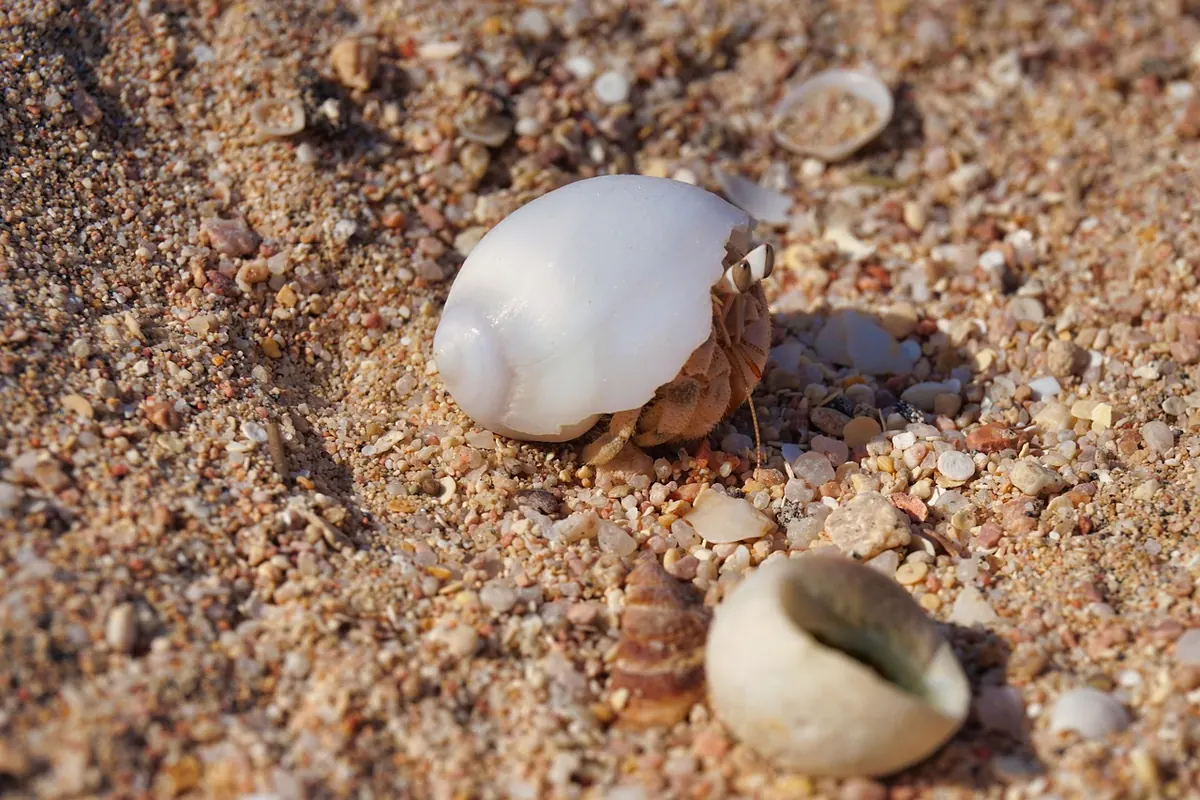
Long before that, it is shelter. Hermit crabs move into empty gastropod shells and will fight over a good one. Small fish, octopuses, bristle worms and anemones use broken shells and shell debris. Barnacles, bryozoans and tube worms attach to the outside of shells that are still lying in the shallows. Gulls and oystercatchers pick at the smaller fragments. A shell that seems abandoned on the sand is often only between tenants.
Then there is the obvious: some shells are not empty at all. A live bivalve clamps shut. A live snail withdraws and seals itself. A sea urchin test still has spines. The mistake is easy to make on a cold morning when everything looks inert.
The Check Before Anything Goes in Your Bag
Four quick tests
- Look for movement. Give it thirty seconds. Antennae, a siphon, a leg, a faint shift in position — any of these means put it back.
- Check the openings. A bivalve with two valves still joined and tightly closed is alive. A snail shell with a smooth, sealed opening or a visible plug of tissue is alive.
- Feel the weight and the surface. A hermit crab's shell often feels light for its size and may be chipped around the aperture. Attached barnacles with feathery feeding arms, or tube worms that retreat when your shadow passes, are living animals riding along.
- Look at the colour. Live sand dollars are fuzzy and dark; dead ones are smooth, white and chalky. A sea urchin with spines is alive; a bare white test is not.
If you are unsure, leave it. There is no shell worth the doubt, and the next tide will bring more.
Know the Local Rules Before You Go
Regulations vary enormously from one coast to the next, and they change. Many marine protected areas, national parks and reserves prohibit or restrict shell collecting outright. Some countries regulate the export of coral and shells at customs. Others allow personal collecting but ban taking live animals or anything from dunes and rock platforms.
Ask at the visitor centre or park office, read the sign at the beach entrance, and check the rules for the specific stretch of shore you plan to walk — not just the region. A short phone call before you travel saves an awkward conversation at the barrier. Treat a warden's "no" as final and specific: they know which beds are recovering.
The Collecting Checklist
Run through this every time, and it becomes automatic within a season.
- Collect only from dry sand above the tide line. Not from the water, not from tide pools, not from the wet strip where animals are still active.
- Leave anything with an occupant, however small, however plain.
- Take a handful, not a bucket. Set a personal limit before you start — five shells is a generous souvenir.
- Leave the rare and the pristine. If it is the only one of its kind you have seen all week, photograph it and put it down.
- Skip the living reef and rock. No coral fragments that are still coloured, no rock with things growing on it, no prying anything loose.
- Keep out of the dunes. Dune vegetation holds the beach together; the bleached shells among the grass are part of that system.
- Carry a cloth bag, not a bucket. It is easier to carry, harder to overfill, and less likely to tip and strand a stowaway.
- Note where and when you found it. A pencil note in a pocket notebook turns a shell into a real record and keeps your collecting honest.
- Recheck before you leave the beach. Tip everything out, look again, and return anything questionable to the same stretch of sand.
- Do not buy shells as a substitute. Souvenir shells are often taken live and in bulk; a shell you found yourself is the better story anyway.
Finds Better Left Behind
Fragile and intact specimens
A large, unbroken conch or cowrie is rare precisely because it has survived. Those are the shells most valuable to the beach and to other collectors long after you. Broken fragments, beach-worn and dull, are the ethical choice — and often the more interesting ones to look at.
Egg cases and live-looking curiosities
Mermaid's purses and whelk egg masses are frequently empty, but a soft, full capsule may still hold a living embryo, so return it to the water. Leave starfish, sea cucumbers and anything still wet in a pool. And handle live cone snails not at all: some species can sting, and a shell in the hand is no longer a shell on the beach.
Beachcombing With Children
Children make excellent collectors and terrible restraintists, so give them a job instead of a rule. Hand them the cloth bag and put them in charge of the "put it back" test: anything that moves, closes, or feels heavy goes back. A small magnifying glass does more for a beach walk than a bucket ever will, and a photograph of a shell held up against the sky lasts longer than the shell.
Set the limit out loud at the start of the walk, when everyone is calm, rather than at the car park when everyone is tired.
A Five-Minute Routine at the End of the Walk
Before you leave the sand, sit down and empty the bag onto a towel in the shade. Look at each shell properly. Return anything with a creature inside, anything you cannot identify with confidence, and anything you took mainly because it was beautiful. Rinse your hands, and if you have been handling shells in warm shallow water, keep an eye on small cuts — a simple wash and dry is sensible, and see a doctor if a wound reddens or swells.
At home, rinse the keepers in fresh water, dry them slowly out of direct sun, and label them with the beach and the date. Skip the oil and varnish; they darken with age and hide the detail you wanted to keep. Store them dry and loosely, and let a few go back into the garden or the compost heap each year if the collection grows.
Collected this way, a shell stays a small, specific memory of one morning on one shore — and the shore keeps everything it needs to make more of them.
Photo: Anrita1705 / Pixabay

Why Local Fishermen Watch Wind and Tides: A Bay Story
In one Mediterranean bay, fishermen read wind, tide and the water's small signals before dawn — habits any...
How to Photograph Coastal Wildlife Without Disturbing It
Practical field craft, camera settings and distance rules for photographing coastal wildlife so the animal...
About Us