Rocky Shore vs. Sandy Beach: A Comparison of Coastal Wildlife Habitats
Stand at the top of a beach at low tide and you can usually tell, within a few steps, which kind of shore you are on. One is a jumble of crevices and wet stone; the other is a wide, quiet plain of sand. They sit side by side along the same coastline, but they behave like different countries, with different rules about who gets to live there and how. Knowing which country you are standing in changes what you see. It turns a pleasant walk into something closer to reading.
Two Shores, Two Sets of Rules
The first difference is stability. Rock stays put. Sand does not. A rock surface is something to grip, glue yourself to, or hide beneath; a sandy beach is something to burrow into, travel through, or be rolled around by. That single contrast shapes almost everything else.
Water behaves differently, too. Waves hitting rock arrive with force, delivering oxygen and food but also threatening to tear animals away. Sand absorbs that energy, which is why sandy beaches often feel calmer — but the price is a shifting surface that drains fast and dries quickly in sun or wind. On rock, the competition is mostly for space. On sand, the competition is mostly for stability.
Rock also offers variety: vertical faces, overhangs, gullies, boulders, pools, surfaces at every height and angle. Sand offers one broad, uniform plain with depth beneath it. More variety means more niches, which is why a rocky shore usually shows clear horizontal bands of life, while a sandy beach shows bands that run up the beach instead — from wet swash to dry upper strand.
Life on a Rocky Shore
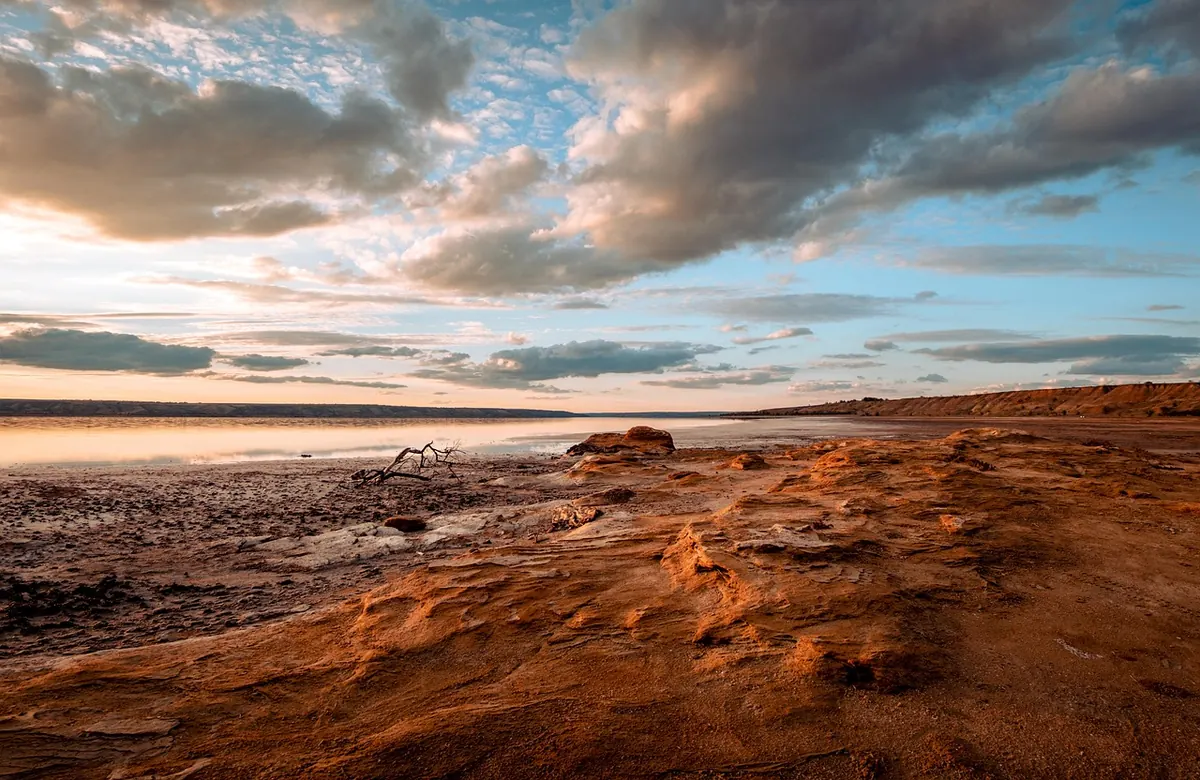
Rocky shores are crowded, and the crowding is organised. Walk from the splash zone down to the water and you pass through distinct neighbourhoods, each one dominated by animals that can tolerate those particular hours of exposure.
The high shore: clamping down
Near the top you will find barnacles, small periwinkles, and limpets, all built to survive long spells in the air. Limpets are worth watching closely: many return to the same spot on the rock and clamp down onto a scar they have worn themselves, sealing in moisture. That is one reason not to pry them off — a limpet that loses its home scar may not survive. Look for the pale, limpet-shaped patches on the rock and you will see how many are at home.
The middle shore: a fight for space
Further down, mussels bind themselves in place with fine protein threads, barnacles cement themselves to stone, and seaweeds such as bladder wrack hold fast with root-like anchors and float their fronds with the tide. Space here is contested. Dog whelks drill into barnacles and mussels, crabs work the crevices, and the whole band is essentially a slow-motion argument over real estate.
Pools and the low shore
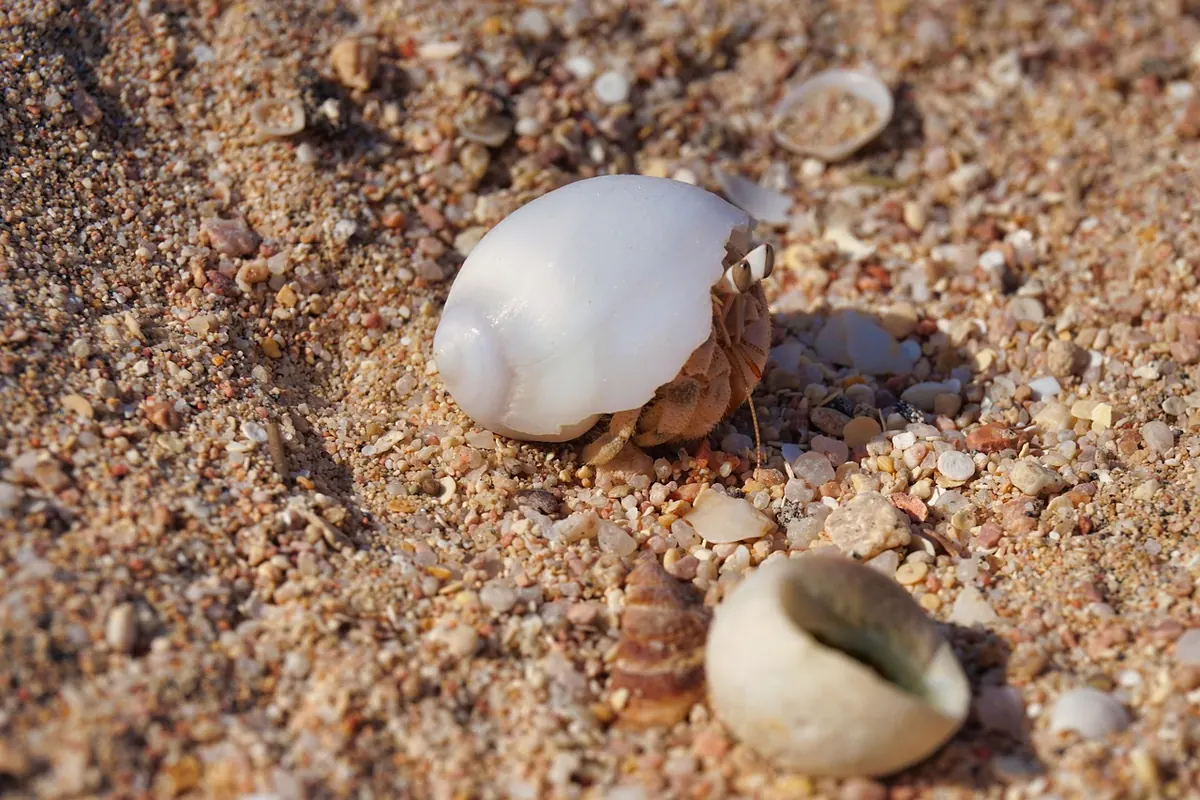
Tide pools are where the rocky shore becomes theatrical. Beadlet anemones sit as soft red blobs until water returns and they open into rings of tentacles. Blennies dart between stones, hermit crabs drag borrowed shells, and starfish and small urchins work the lower edges. Remember that a pool is a harsh place in miniature: on a hot afternoon, its water can become far warmer and saltier than the sea a few metres away.
Life on a Sandy Beach
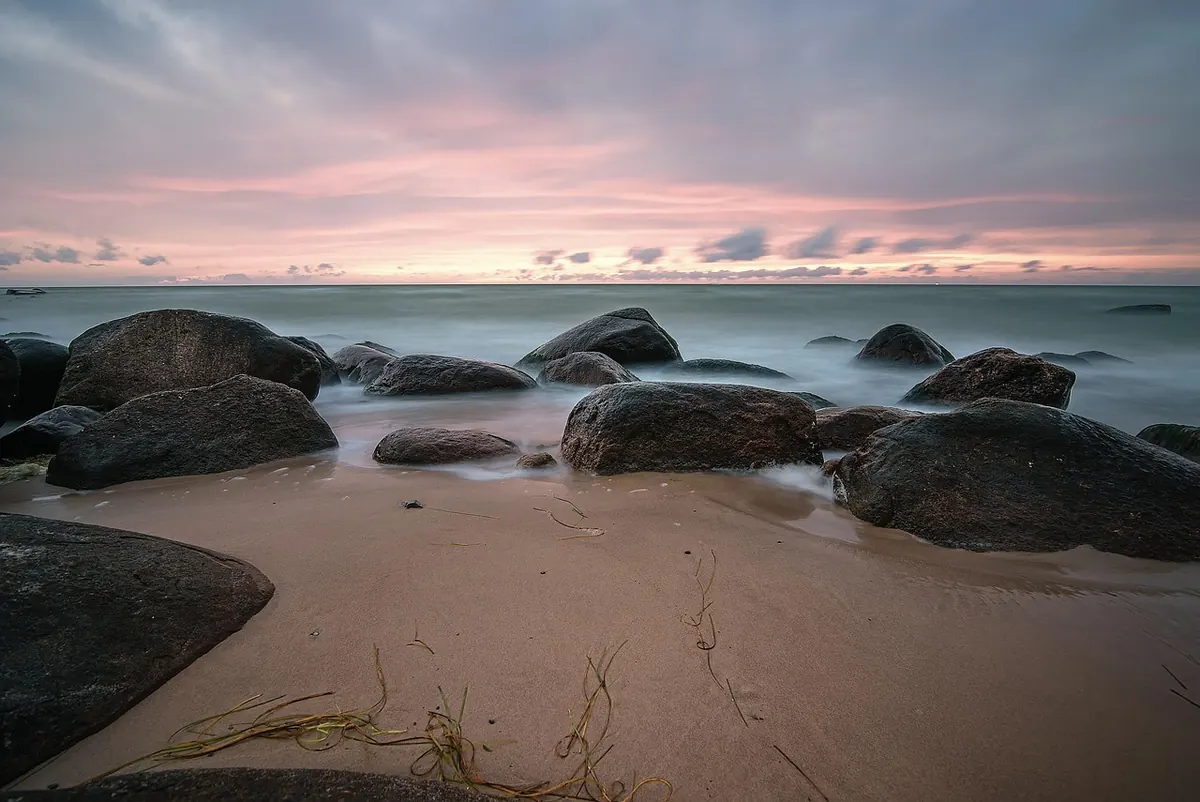
Sand looks empty, and that is the point. Almost everything on a sandy beach is either buried, transparent, or moving. Instead of scanning surfaces, you learn to read signs.
Lugworm casts — small coiled ropes of sand — mark where a worm has been feeding below the surface. Small dimples and paired holes can mean cockles or buried clams with siphons reaching up. At the water's edge, mole crabs ride the swash up and down the beach, filtering food from the moving water as each wave pulls back. Razor clams retreat so quickly that you usually see only the hole.
Then there is the wrack line, the dark ribbon of seaweed and debris at the top of the last high tide. It looks like litter; it is a larder. Sand hoppers and small beetles shred it, and that community in turn feeds birds. Turn over a piece of drift seaweed and things will scatter — put it back where you found it.
Birds are the easiest sandy-beach wildlife to watch. Sanderlings chase the retreating swash and sprint back ahead of the next wave; oystercatchers probe for buried shellfish; gulls and terns work the shallows. Higher up, dunes and dry sand support marram grass and, in some places, beach-nesting birds whose eggs are almost invisible against the shingle. Where turtles nest, the whole upper beach becomes a nursery for a few months a year.
Where the Two Meet
Some of the best wildlife is at the seams. A boulder patch on an otherwise sandy beach gives you the best of both: attachment sites for algae and anemones, soft sediment for burrowers, and small fish using the rocks as cover. Pebble banks, rock ledges running out into sand, and the mouths of estuaries all behave like this, mixing habitats within a few paces.
If you only have an hour, head for an edge rather than the middle. The boundary between rock and sand, or between wet and dry beach, is usually busier than either side alone.
Where to Look: A Field Routine
- Check the tide first. Aim to arrive an hour or two before low water, so the shore is still wet and the tide is heading out. Never let a good find distract you from a returning sea.
- Start high and walk down. Begin at the wrack line, then move down through each band. Going in order teaches you the zonation faster than wandering.
- On rock, look at edges. Crevices, undersides, and the boundary where weed meets bare stone hold far more life than flat, open surfaces. Turn small stones back exactly as you found them; leave large ones alone.
- On sand, look for signs. Casts, dimples, siphon holes, and footprints tell you what is present without disturbing it.
- Sit still for five minutes. On sand this is almost essential: the beach seems to wake up once you stop moving.
Before You Go: A Short Practical Checklist
- Wear footwear with grip — wet rock and wet weed are both slippery — and keep your hands free.
- Take a tide table or check one before you leave; coastal tides can move faster than they look.
- Photograph rather than collect. Shells, seaweed, and driftwood are habitat, not souvenirs.
- Keep dogs and children away from roosting birds and from the upper beach where nests may be hidden.
- Watch where you put your hands in pools: some anemones and small urchins are delicate, and a few coastal animals can give a sharp nip or sting.
- Leave the wrack line where it lies. Moving it back a metre or two can strip food from a whole community.
Both shores are worth your time, but they ask for different attention. On rock, slow down and look sideways into crevices. On sand, slow down and look for traces. Either way, the coast gives up far more to a patient visitor than to a fast one.
Photo: Seaq68 / Pixabay

Why Local Fishermen Watch Wind and Tides: A Bay Story
In one Mediterranean bay, fishermen read wind, tide and the water's small signals before dawn — habits any...

How to Photograph Coastal Wildlife Without Disturbing It
Practical field craft, camera settings and distance rules for photographing coastal wildlife so the animal...
About Us