How to Identify Five Common Shore Crabs on Mediterranean Rocky Shores
Turn over a flat stone at the edge of a Mediterranean rock pool and for a second nothing happens. Then the stone appears to grow legs. Shore crabs are masters of the sudden exit: one flick of a flattened body and they are gone into a crack you would swear was too narrow to fit a coin. Yet the same few species turn up again and again, in the same zones, behaving in the same ways. Once you know which details matter, you can name most of them from a metre away, without picking anything up.
Here are five crabs you can reasonably expect to meet between the splash zone and the shallow pools, from Sicily to the Ligurian coast — plus the field marks that separate them when the light is poor and the crab is already half under a ledge.
Read the Rock Before You Name the Crab
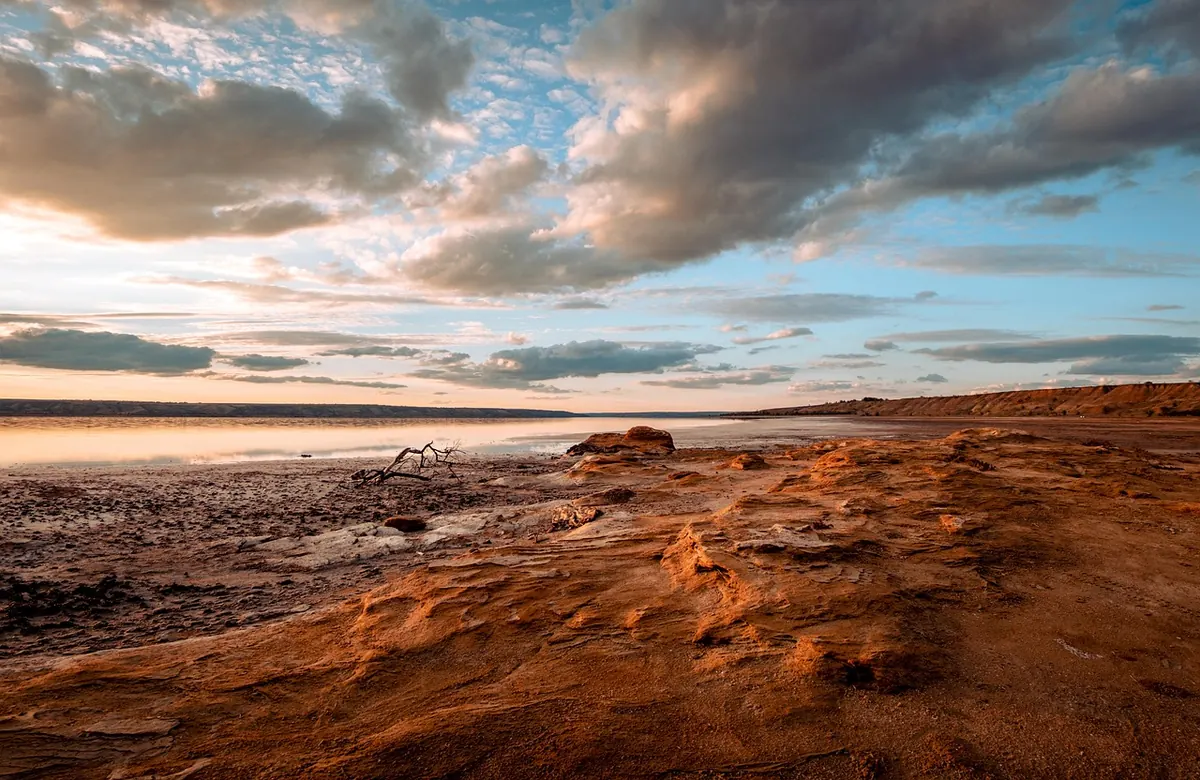
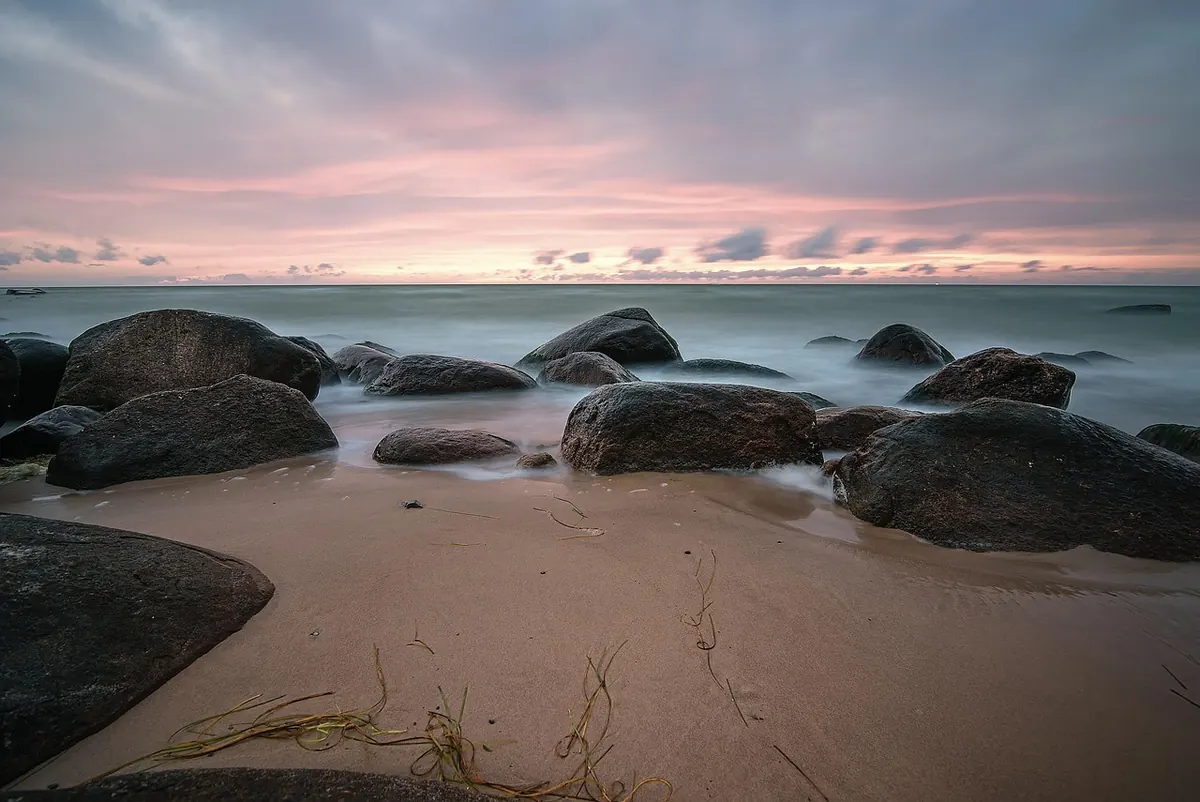
A rocky shore is not one habitat but several stacked on top of each other. The higher you go, the more time a crab spends out of the water, and the fewer species can cope. Think in bands rather than in species. On a limestone shore in Puglia, the splash zone may be a dark wet strip above the barnacles; in Liguria, the same band can be a fissure in grey rock behind a harbour wall. The marbled crab patrols cracks well above the waterline; the warty crab sits at the low-water mark and below it; small hairy crabs hide under stones in the middle and lower shore. The nimble spray crab is usually lower still, on vertical faces and under overhangs where spray keeps the rock wet. So the first question is not “what is it?” but “where exactly did I find it?”
Go on a calm day with a falling tide, early in the morning if you can, or in the hour before dusk. Crabs are sensitive to moving shadows, so keep the sun behind you and let your shadow fall away from the rock rather than across it. Crouch rather than stand, wait rather than reach, and give your eyes thirty seconds to adjust — the rock will start to move.
Before you try to name a crab, note four things:
- Carapace outline. Square and flat, broad and oval, disc-like, or small and rounded?
- Side teeth. Are there visible spines or teeth along the edges of the shell between the eye and the widest point?
- Colour and surface. Marbled, warty, smooth, or furry?
- Claws and legs. Dark claw tips? Fringes of hair on the legs? Flattened, blade-like legs?
Use the same route twice. A crab that vanished from one stone will often reappear within a hand’s width of it after a few minutes; if you return the next day at the same tide height, you may find the same species in the same crack. That kind of repetition is more useful than a single lucky sighting, because it teaches you the zone as well as the animal.
The Marbled Crab: Square Shell, Racing Legs
Pachygrapsus marmoratus is the crab most people see first, and the one that convinces beginners that crabs are impossible. Its carapace is almost square — broad and flattened, with a gently curved front edge and faint ridges running across it — and the colour is a dark olive or brown-black broken up by pale marbling, like a wet stone with lichen on it. Small individuals can be sand-coloured with fine green speckling, which is why they are often mistaken for a different species.
Look for it high on the shore: in the splash zone, on harbour walls and jetties, in limestone fissures that stay damp but sit above the water at low tide. It runs on vertical rock, and it can cross a wet surface faster than your eye can follow. The giveaway is the combination — square shell, marbling, flattened legs with hairy fringes, and the fact that it is high and dry and still moving. If it dives sideways into a crack and stays there, you were probably right.
Watch one for a minute and you will see the other clue: the marbled crab is rarely still for long. It edges out, stops, shifts sideways, stops again, then makes a dash for the next crevice. On a busy harbour wall you may count a dozen without turning a single stone.
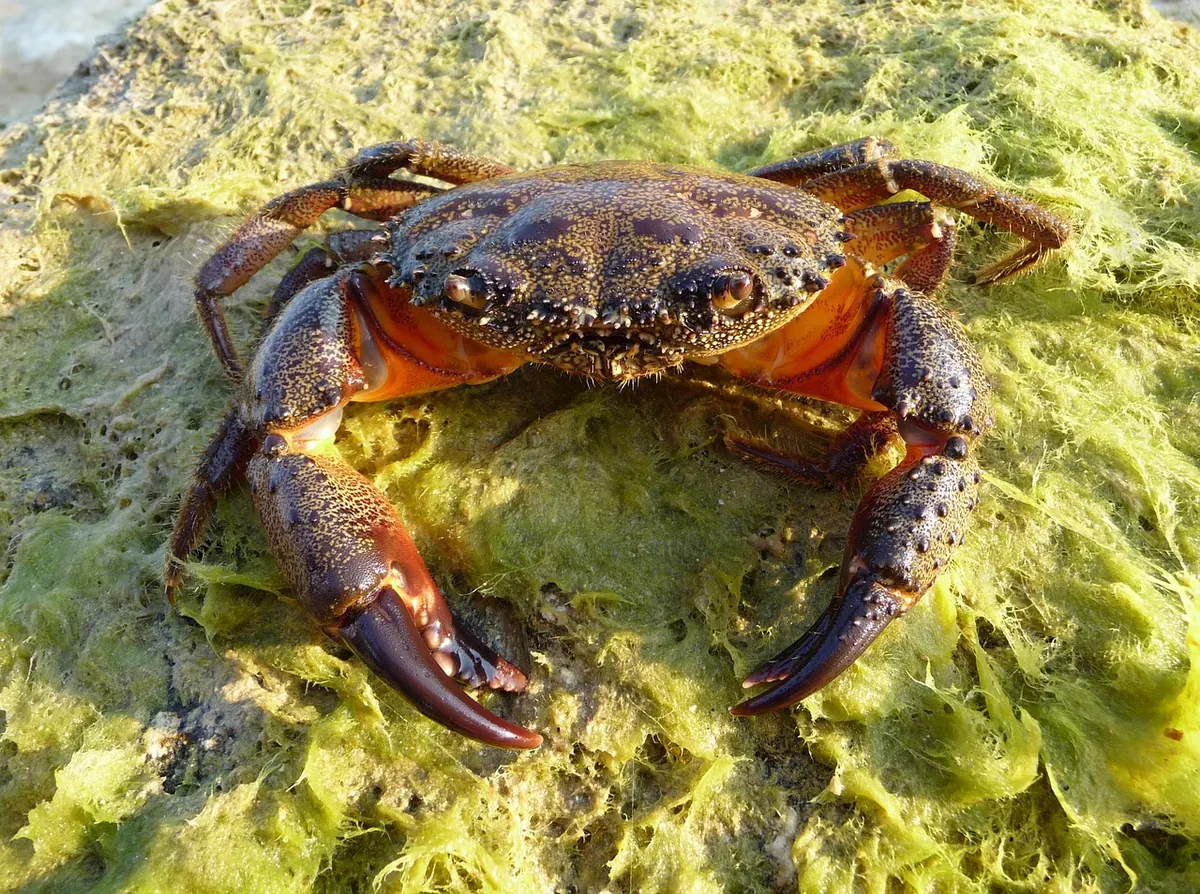
The Warty Crab: The One That Holds Its Ground
Eriphia verrucosa is the bruiser of the group. Thick, heavy, wider than it is long, with a shell covered in bumps and granules — verrucosa means warty — and a front edge cut into lobes and small spines. Colour varies with the rock it lives on: reddish-brown, olive, purple, sometimes yellowish, with darker mottling. The claws are thick, with black tips and pale finger ends, and flattened hairs give the whole animal a rough, dusty look.
It belongs to the lower shore and the shallows just below, wedged into crevices and under big boulders, often where there is algae. During the day you may see nothing but two claws blocking a gap. This is the crab you can actually watch, because it does not run: it sits, claws out, and waits for you to lose interest. Give it a minute and you will often see an eye stalk shift.
That stubbornness is a useful field mark. Where a marbled crab would already be gone, the warty crab holds its position, as if daring you to reach in. Do not. Look instead at the heavy build, the warty shell and the black claw tips, then leave it in peace.
The Mediterranean Green Crab: Count the Teeth
Carcinus aestuarii is the smooth one. The carapace is broad and gently flattened, mottled green, olive or brown, with five small teeth along each side of the shell between the eye and the widest point. Count them and you have separated it from most of the crabs on this list. The front edge between the eyes is slightly curved with three low lobes. Some individuals are bright orange-red rather than green; these are usually crabs that have not moulted for a long time, and they confuse almost everyone.
Search the lower shore, sheltered bays, lagoons, muddy pockets between rocks and weedy pools. It tolerates low salinity, which is why it turns up in estuaries and brackish inlets as well as on open coast. In rocky sites, look for the weedy, muddy pockets between boulders rather than clean surf. If you see a green crab with a pale underside pressed into a weed-filled gutter, it may sit tight long enough for you to count the teeth.
The Small Hairy Crab: Look for the Fur
Pilumnus hirtellus is the one that looks as if it has been dipped in dust. The carapace is small, oval and distinctly furry, reddish-brown to purple, with bristles that trap silt and give the crab a rough, unkempt outline. The claws are relatively large for the body and usually have dark tips. It lives under stones in the middle and lower shore, often with weed, and it is not a sprinter: when the stone lifts, it freezes or shuffles into the nearest crevice rather than bolting across the rock.
To separate it from the marbled crab, look at the shape and the zone. The hairy crab has a rounded, oval shell rather than a square one, no marbled pale pattern, a dense coat of hair, and a lower position on the shore. If you see a crab no bigger than a thumbnail with a coat of bristles and its claws tucked under its face, it is probably this species.
The Nimble Spray Crab: The Flat-Legged Sprinter
Percnon gibbesi is the odd one out, and once you have seen it you will not mistake it for anything else. The carapace is flattened and disc-like, the legs are long and slender, and the outer leg segments are flattened into blade-like paddles rather than rounded cylinders. The colour is brown or purplish with pale banding, and the whole animal looks built for slipping through water rather than lumbering over rock.
It lives low on the shore and in the shallow subtidal, on vertical rock, under overhangs and among sea urchins. It is very fast, darting sideways and vanishing into cracks with a movement that seems more fish than crab. It is now common in parts of the Mediterranean, and it rewards patience: stand still at a shaded overhang and one may emerge, flatten itself against the rock, then sprint for the next pool. If you see a flat, long-legged crab race across a vertical wall, check the legs — flattened blades are the clincher.
A Quick Field Key
Use this only after you have noted the zone and the shell shape. It is a prompt, not a substitute for looking.
- High shore, square shell, marbled, flattened legs: marbled crab.
- Low shore, thick warty shell, black claw tips, stays put: warty crab.
- Lower shore or lagoon, smooth shell with five side teeth: Mediterranean green crab.
- Under stones, small oval shell covered in hair: small hairy crab.
- Vertical rock, disc-like shell, blade-like legs, very fast: nimble spray crab.
If two answers fit, go back to the side teeth and the claw tips. Colour is the least reliable character on a wet shore: it changes with light, with moult stage, with algae on the shell, and with the colour of the rock itself.
Good Practice on a Living Shore
Identification is easier when you leave the animal where it is. Turn stones away from you, not toward you, and put them back exactly as they were, with the damp side down. Do not chase a crab across the rock; let it settle, then look at the shape and the zone. If you want a closer view, use a clear jar or a white tray and return the crab to the same crevice.
Name the crab, note the zone, return the stone. A shore that is read carefully is a shore that can be read again.
Finally, record what you see. A simple note — species, zone, rock type, time of tide — will make you better than any photograph. The five crabs above are common enough to become familiar, and familiar enough to reward a second look.
Photo: WikiImages / Pixabay

Why Local Fishermen Watch Wind and Tides: A Bay Story
In one Mediterranean bay, fishermen read wind, tide and the water's small signals before dawn — habits any...

How to Photograph Coastal Wildlife Without Disturbing It
Practical field craft, camera settings and distance rules for photographing coastal wildlife so the animal...
About Us